

A tour of historic plantations, contemporary houses and gardens in the cradle of the nation
Saturday, September 27, 2025 | 9:30 a.m. – 4 p.m.
Proceeds of the day will benefit the Church and its area outreach programs, including Meals on Wheels, other local feeding programs, and children’s outreach through the County’s Social Services agency.
Venues are NOT Handicapped Accessible
The Tour
Charles City County lies north of the James River between Richmond and Williamsburg along Route 5, a National Scenic Byway. The eastern end of it follows part of an ancient Algonquin Trail which began near Jamestown. Considered the earliest developed English thoroughfare in Virginia, the road was an important thoroughfare used to transport goods and forward communications between communities in the earliest days of settlement. The James River was the more critical artery for trade and communication, connecting Williamsburg, the colonial capital after 1699, to Richmond, the current capital located at the falls of the James River. Today, Richmond and Jamestown are connected by the Capital Bike Trail. Thousands of cyclists enjoy this remarkable trail as they experience the rural beauty of Charles City and James City Counties.
Charles City was one of the four great corporations set up by the Virginia Company of London in 1618. It became one of the eight original shires (or counties) of the Virginia Colony in 1634.
In this community, rich in early American history and architecture, you are invited to visit private plantations and gardens from centuries past and also houses from the present. From imposing 18th century plantation houses to smaller domestic structures, churches and church glebes, the county offers a stunning breadth of well-preserved American Colonial architecture. Continually changing views of the James River from many of the houses lend a clear perspective of its importance and majesty from earliest colonial times to the present. A tour of truly notable architecture in Charles City should include visits to at least four of its 18th century plantations, Berkeley, Shirley, Westover, and Sherwood Forest. There, the ancestral homes of past presidents and notables of Virginia society preserve glimpses of the past that bring to life events and ideas that shaped our country in its earliest days. During the Civil War, Union troops occupied Berkeley and Westover, among other sites in the county. Abraham Lincoln twice visited there in the summer of 1862 to confer with Gen. George B. McClellan. Farther east, near “North Bend,” a pontoon bridge was constructed across the narrow section of the James River to allow Union troops to cross easily from the southern side of the river. Not surprisingly, the War caused considerable damage to many houses and their occupants in Charles City. Many early documents were destroyed as well.
In addition to these prominent houses are numerous structures in the county which exemplify on a smaller scale 17th, 18th and 19th century architecture, as well as vernacular building methods. Modern houses reflect new tastes and styles of living. All the houses on tour tell a compelling story through architecture about the lives of those in the past and present who have lived in this beautiful rural county.
“We recognize and remember the First Nations, the native people who were removed from this portion of God’s creation by force. These nations/tribes in Virginia include the Powhatan, the Chickahominy, the Monocan, the Arrohateck, the Nottoway, and other nations/tribes whose contributions we’ve lost. We recognize and remember enslaved Native Americans, and enslaved Africans and their descendants, separated from their families by force, and who lived under horrific conditions to help build this country. May we always remember that the earth does not belong to us but is a gift from God. May God’s grace and wisdom lead us from our past mistakes to become instruments of justice and peace for all people.”
– Written by the Native American/Indigenous Ministries in the Diocese of Virginia, July 2023, for the Diocesan Offices in Richmond, Virginia
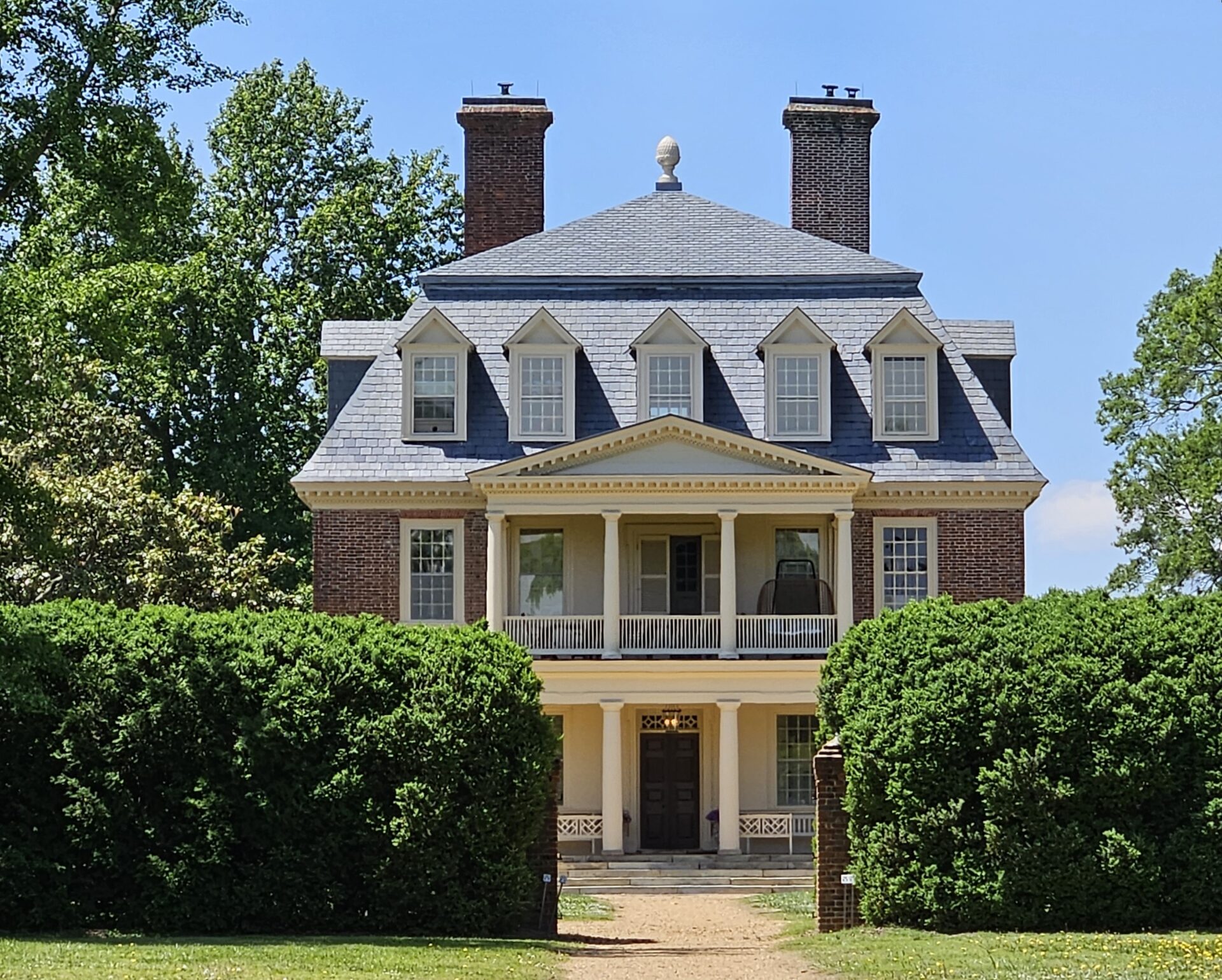
Shirley Plantation (1723)
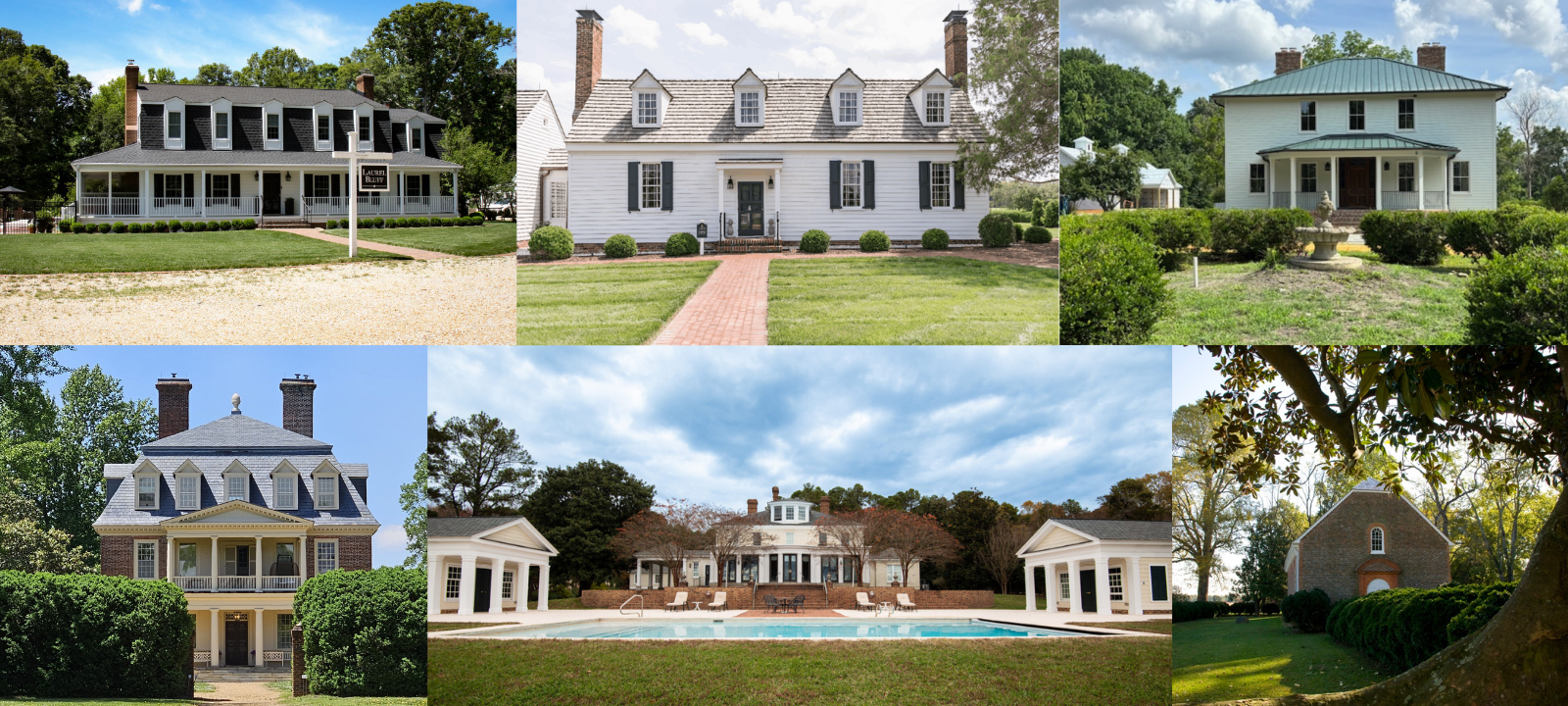
501 Shirley Plantation Road (map)
`Virginia Historic Landmark
Shirley is Virginia’s first plantation, founded in 1613 after a royal land grant carved the plantation out of the Virginia frontier. Established only six years after John Smith’s settlement at Jamestown, Shirley stands as a testament to colonial life and early American history of the indigenous, settlers, indentured, and the enslaved. It is the oldest family-owned business in North America, dating to 1638.

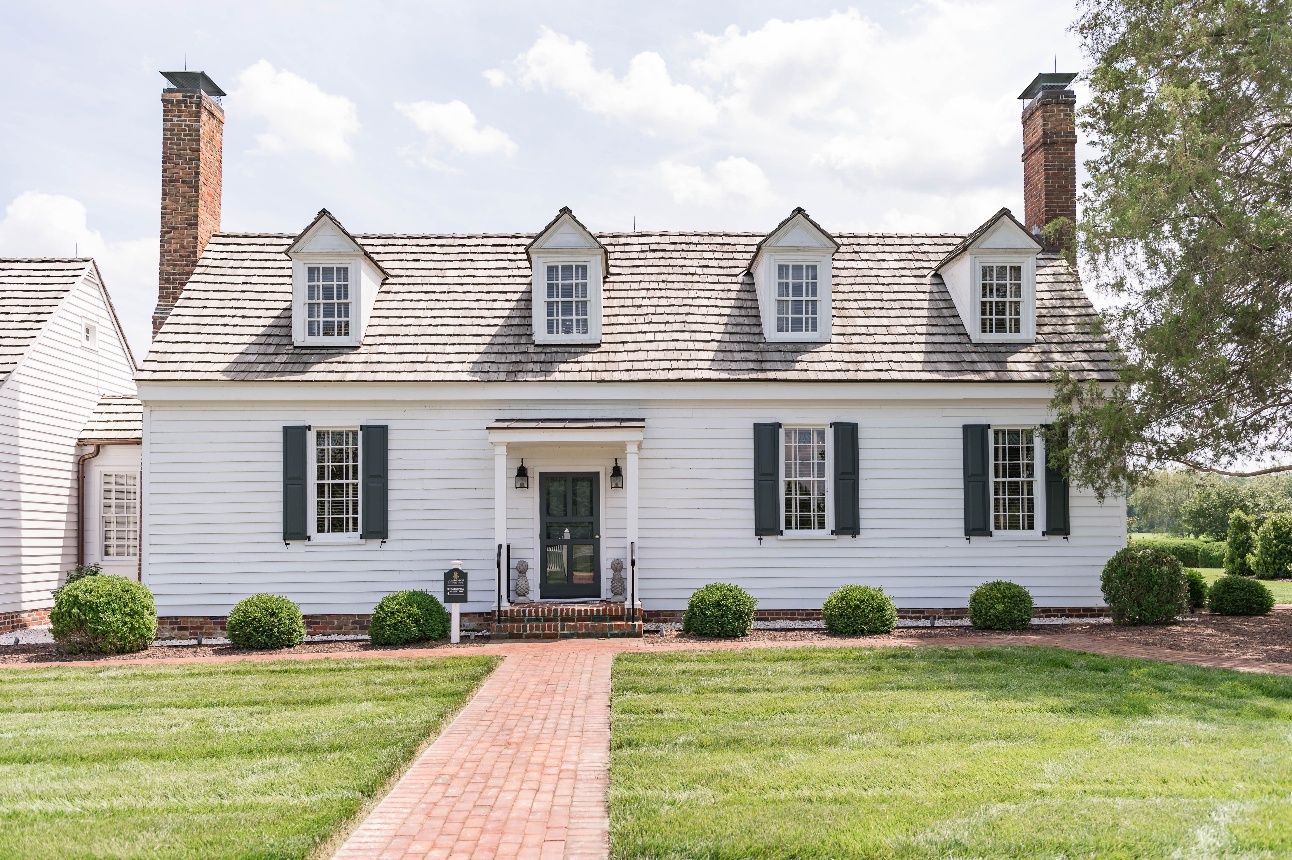
House at Herring Creek (c.1880)
6111 John Tyler Highway (map)
Rebuilt from the ground up in 2025, the House at Herring Creek is a close replica of the original Neston house, believed to have been built in the 1880s.
Mary Ball Saunders Ruffin and John Augustine Ruffin (with their 5 children) lived at Neston during the construction of the Evelynton Plantation house in the 1930s.
Burlington (1818)
13221 John Tyler Memorial Highway (map)
Burlington Weddings & Events is a classic farm style home built circa 1818, eleven miles west of historic Williamsburg, Virginia.
The main house was started by the Edwin and Sara Major family in 1815 and initially completed in 1818. The Major family continued to occupy and improve the main house, doubling its size around 1840. After 1859, the property passed to John Mumford Gregory, a member of the Virginia House of Delegates and Governor of Virginia. The property changed hands five more times over the next 130 years.
The homesite, situated amid several hundred acres of fertile, rural farmland along Virginia State Byway Route 5, features a smokehouse that dates to the late 1700s, a dependency separated from the main house, an icehouse, a boxwood garden, and a small vineyard.
Renovations in the main house have been designed to stay true to the spirit of the original historic structure. The living room, which dates from the early nineteenth century, has the original pine floors and wide pit-sawn wainscoting topped by a chair rail. The fireplace has been restored, along with a period-appropriate mantel.
Modern features have been incorporated in a way that preserves the character of the historic structure.
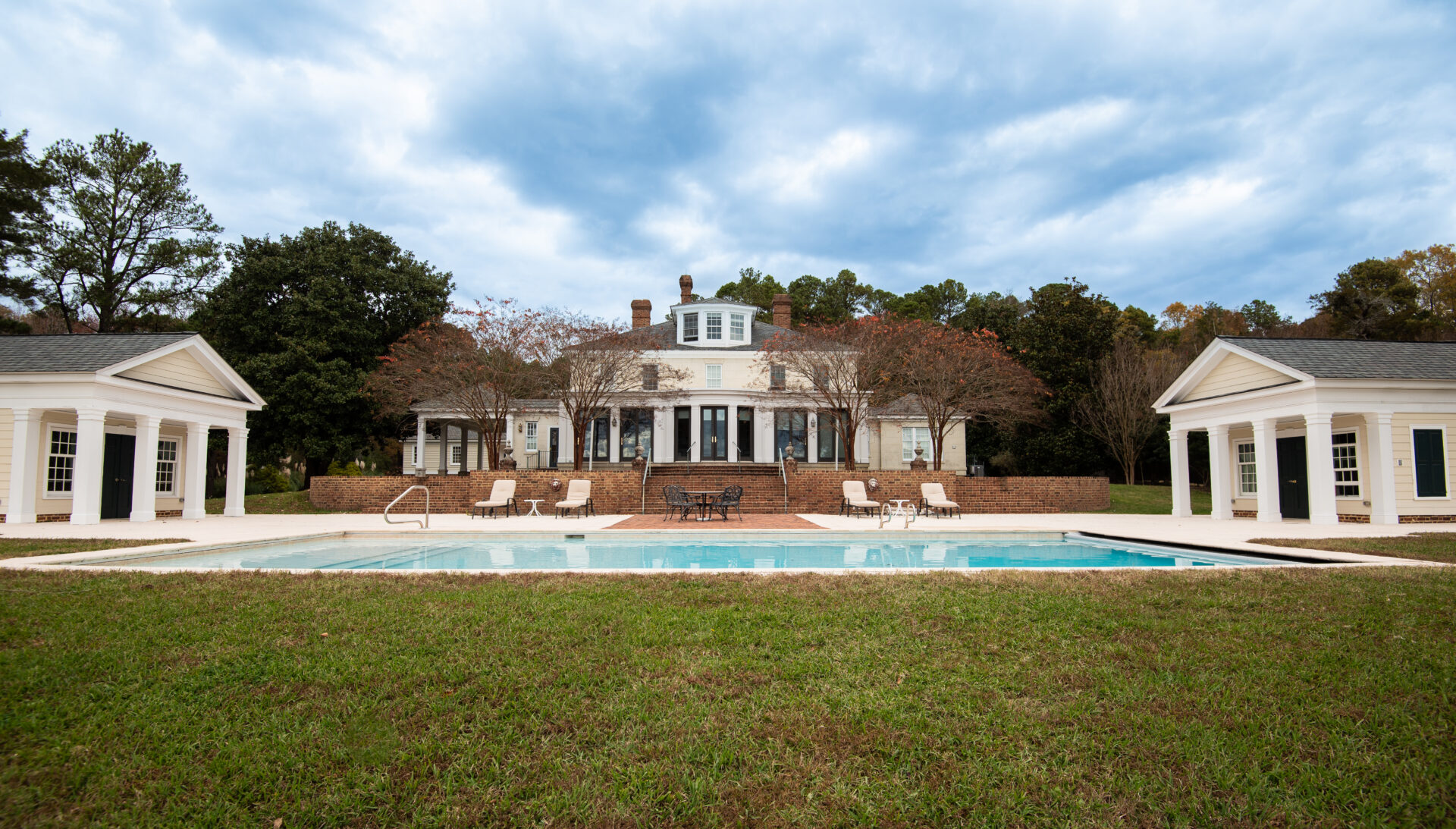
Milton (c. 1625)
13202 Tylers Mill Rd, Charles City, VA 23030 (map)
Boasting almost 400 years of history, Milton is a beautiful property overlooking the James River. Milton began as a 1,200 acre property, originally growing tobacco, and then expanding into wheat, corn, and peas.
Milton was once the summer home of Dr. Lyon Gardiner Tyler, who was president of the College of William and Mary for 31 years and a son of President Tyler.
In 1986, Harrison Tyler, a grandson of President Tyler, and his wife, Paynie, purchased Milton. In 1996, the Tylers began a slow restoration of the house, inspired by their southern heritage and special interest in the American Empire period.
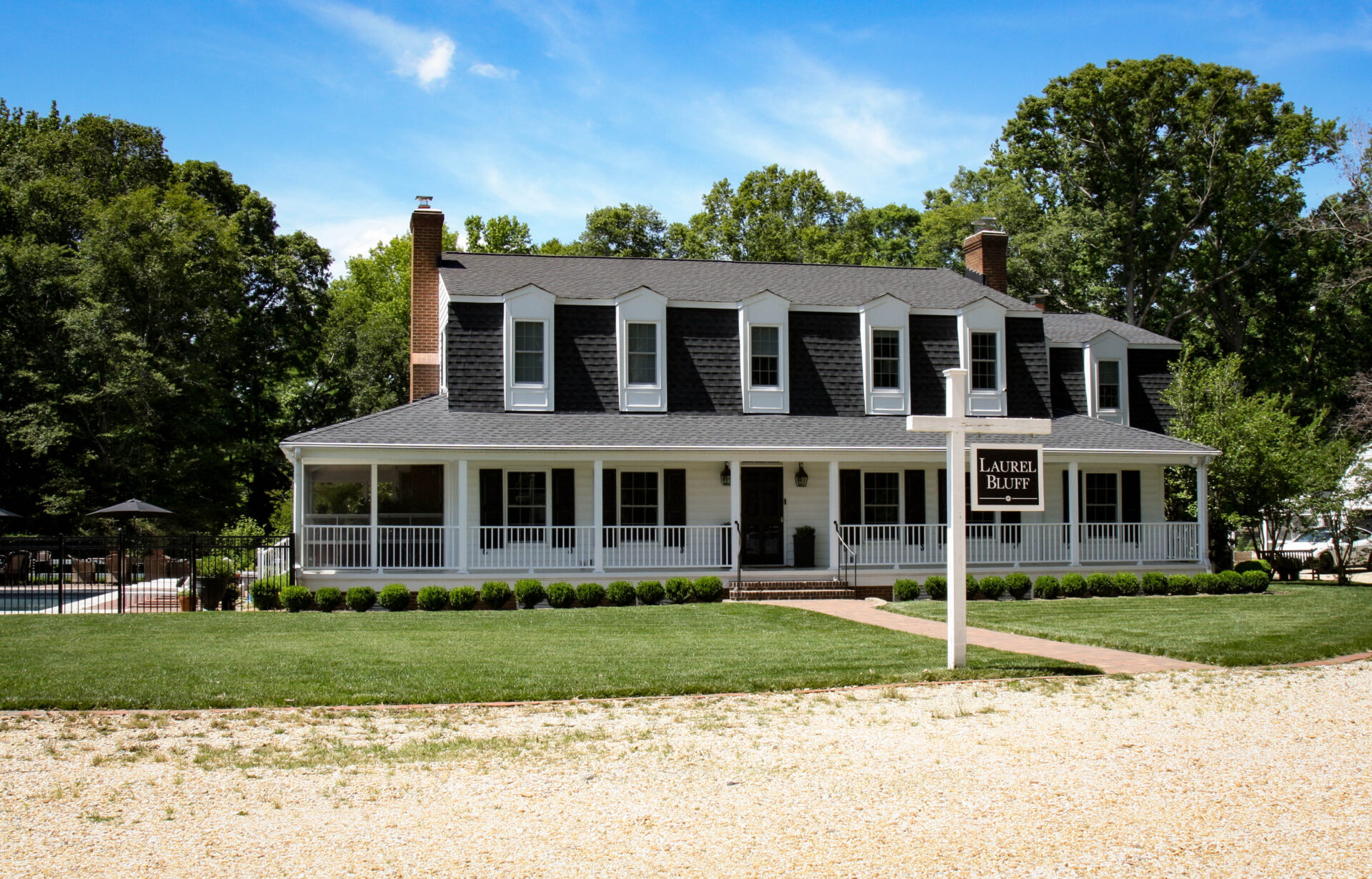
Laurel Bluff (c. 1600)
12831 Sturgeon Point Road (map)
This home gets its name from the abundant Mountain Laurel found throughout the property. The laurel blooms briefly in May, lighting up the woods with white and pink quilted flowers. The property sits on land which was part of the David Jones Land Grant, one of the earliest land grants issued following the dissolution of the Virginia Company in 1624. Located on a bluff at the end of the Seven Mile Reach on the James River, the view is breathtaking. The property is full of wildlife, great for hunting and fishing. It also includes miles of walking trails, winding through the woods overlooking Tyler Creek.
The home was purchased in 2022 by Matthew and Hilary Sharpe, immediately undergoing extensive renovation. Gardening and outdoor living is a significant part of life at Laurel Bluff, so exterior renovations were as important as the interior. The house has a classic colonial layout, with French doors opening to a screen porch overlooking the pool and water. The warm and comfortable interior is an invitation to stay, relax and enjoy yourself. In fact, the kitchen, porch and patio are often filled with family and friends.
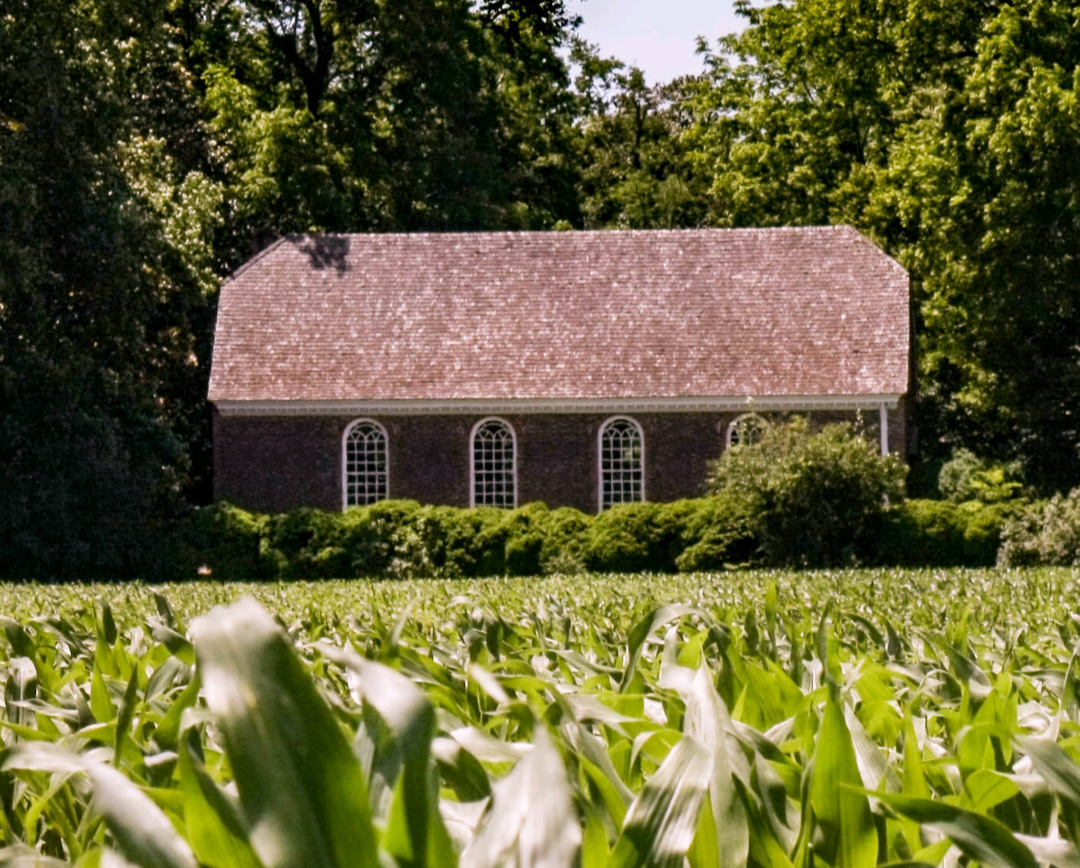
Westover Episcopal Church (1730)
6401 John Tyler Highway (map)
Westover Parish was established in 1613 in close proximity to the original settlement at Jamestown. Following the 1724 merging of all or part of the Parishes of Weyanoke, Wallingford and Wilmington into Westover Parish, Westover Parish shared the same boundaries as Charles City County, and still does. The predecessor to the existing Westover Church, probably a wooden clapboard structure, was constructed between 1630 and 1637 on the grounds of Westover Plantation. About 1730, the original structure was dismantled and reconstructed in brick at its present site overlooking Herring Creek, about one and one-half miles north of the Westover mansion. Land for the second church was given by William Byrd II.
Over the years since the present Westover Church was built, it has sustained many economic, physical and congregational changes. The Revolutionary War in 1776 ended support by public taxation for the Episcopal Church. In 1784, the church was disestablished. These precedents, and the War of 1812, created a widespread prejudice against the Church as an English Royalist institution and contributed to its general decline. The result was a period when the churches “mouldered away,” bereft of ministers, congregations, parish lands, and financial support. For almost thirty years after 1803, services of the Protestant Episcopal Church of Virginia lapsed completely in Charles City County. Westover Church lay abandoned, desecrated by misuse as a barn during part of that time.
About 1833, religious services were revived when the Reverend Parke Farley Berkeley was sent to the county as a missionary. At this time the Church structure was repaired and restored, principally through the efforts of the Harrison family of Berkeley and the Carters of Shirley.
During the Civil War, Westover Church was badly damaged by federal troops who removed pews, windows, slate flooring and even tombstones as they gathered materials for construction of winter quarters at Berkeley. The gutted building was then used as a stable by Union forces. The Church remained vacant for a time following the war as parishioners raised funds for its reconstruction. Westover Church finally was restored to service in September 1867 and has been supported faithfully ever since. Through the centuries, farmers, plantation owners, the enslaved, and Presidents, including Washington, Jefferson, Harrison, Tyler, Theodore Roosevelt and Woodrow Wilson, have worshipped here.
Two historic colonial silver communion sets are used at Westover Parish Church. The older set, handsomely designed with gadrooning, scalloped matting and punch decoration, includes a chalice (11-5/8 inches high) and paten (7-3/4 inches diameter; 2-1/4 inches high), both marked London, 1694-95, and both inscribed with a cipher of the donor’s initials, “SABE.” The cover of the chalice is inscribed “Sarah Braine” to commemorate the donor. Sarah Braine was a notorious figure, a sympathizer with Bacon’s Rebellion and the only woman excepted from the free and general pardon granted by the General Assembly in 1677. She was married four times, to Lieutenant Colonel Thomas Stegge (an uncle of William Byrd II), George Harris, Thomas Grendon, and Edward Braine, a wealthy London merchant.
A large matching baptismal basin (19-1/4 inches diameter) originally was part of the set. It was sold in 1884 to help ease dire financial conditions at Westover. The basin was given as an “Easter Gift to St. John’s Church, Richmond, Virginia. By Edmund A. Saunders and Richard L. Brown in behalf of their little daughters, Mamie, and Bessie, 1886.” The current church of Westover Parish always has used the Braine set.
The other chalice (10-3/4 inches high) and paten (7-7/8 inches diameter; 1-3/4 inches high), both bearing the London mark of 1731-32, are engraved with the sacred HIS monogram in a sunburst, a common motif in 18th century church silver. Both pieces are inscribed “The Gift of Col: Fran: Lightfoot Anno 1727.” “Westover Parish Church” was inscribed later. The Lightfoot set was used until 1920 in Lower Westover Parish, first at Wallingford Church and then at Mapsico Church, neither of which now stands.
During the Civil War, the Lightfoot silver was buried under a barn for safekeeping from the approaching federal troops. It was found and taken for use by a Union Captain for drinking his whiskey. When an old gentleman of the county learned of this, he approached U.S. Gen. Carr at Fort Pocahontas on Wilson’s Landing in May 1865, asking that the silver be restored to Westover Parish. Gen. Carr did so, much to the relief and gratitude of the petitioner.
Westover Parish records illustrate early vestrymen included the names of Lightfoots, Blands, Minges, Byrds, Carters, Harrisons, Tylers, Christians, Seldons, Nelsons, Lewises, Douthats, Eppes, Willcoxes, Hills, Drewes, Peebles, Wyatts, Wynnes and others. Many of these names, or their descendants, can be found in 19th, 20th and 21st century vestry books and parish records.
Today, Westover Episcopal Church has an active congregation. Its outreach programs include delivery of Meals on Wheels to local citizens, a partnership with Habitat for Humanity, an annual Thanksgiving food drive, a monthly feeding ministry with Walter Paige’s Missionary Kitchen, and ongoing program support for Charles City County Schools.