

A tour of historic plantations, contemporary houses and gardens in the cradle of the nation
Saturday, September 26, 2026 | 9:30 a.m. – 4 p.m.
Proceeds of the day will benefit the Church and its area outreach programs, including Meals on Wheels, other local feeding programs, and children’s outreach through the County’s Social Services agency.
Venues are NOT Handicapped Accessible
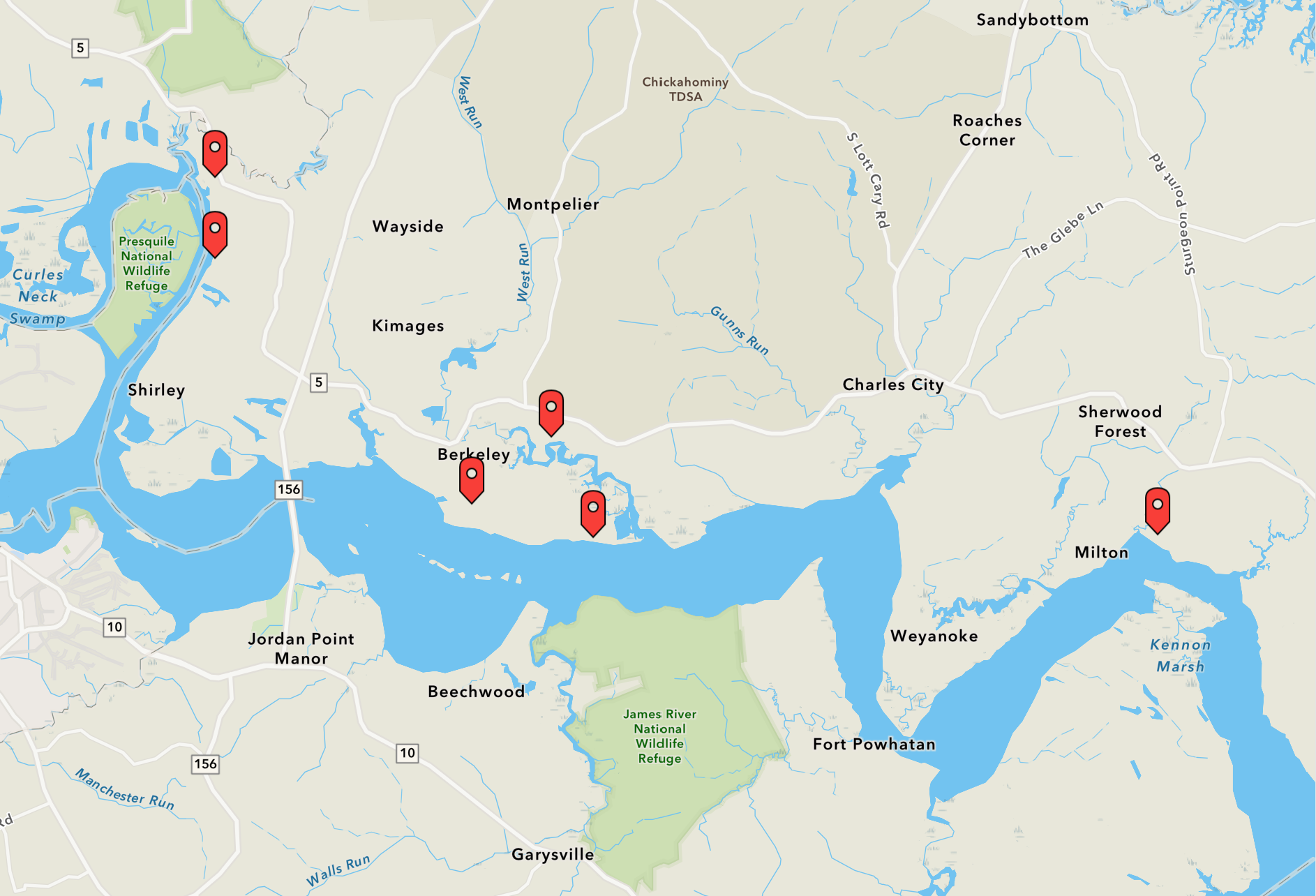
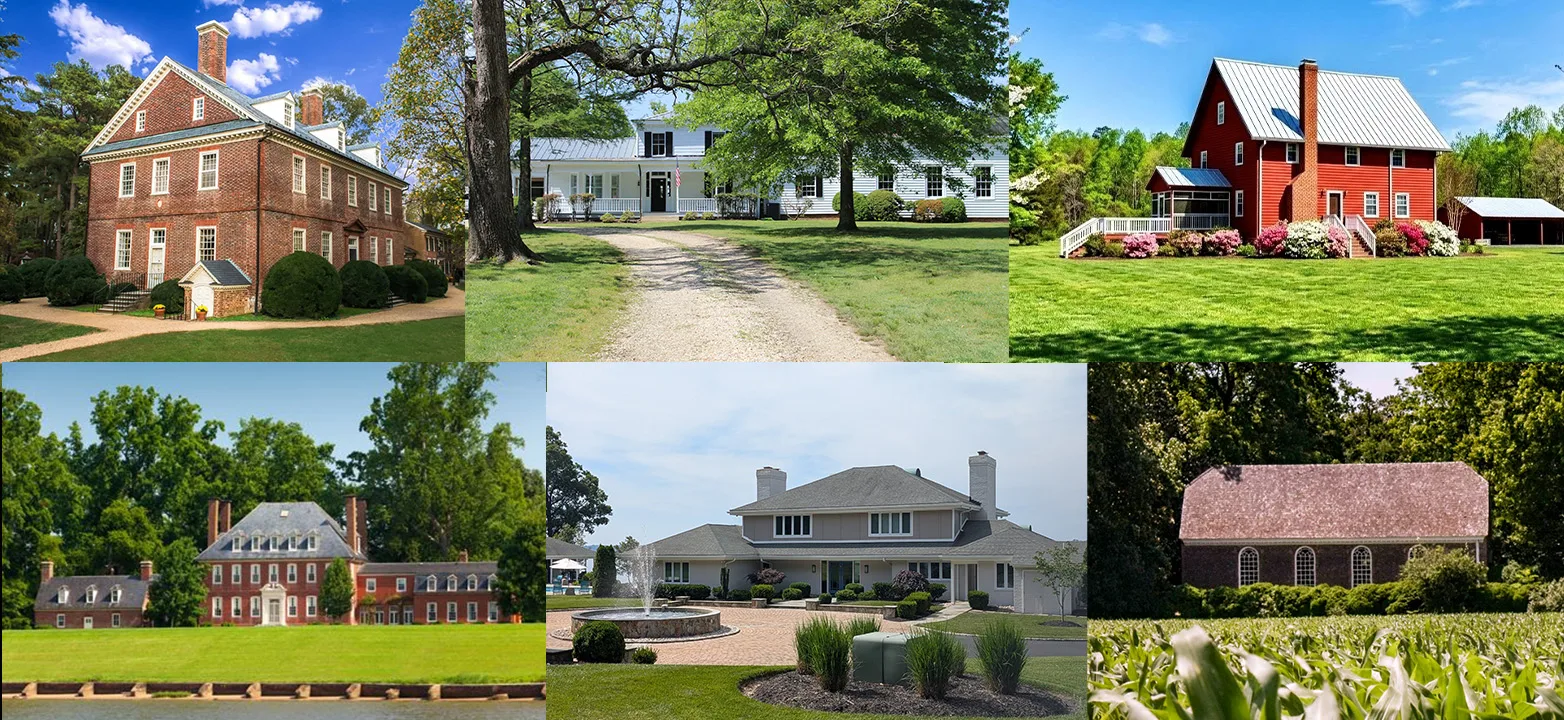
The Tour
Charles City County lies north of the James River between Richmond and Williamsburg along Route 5, a National Scenic Byway. The eastern end of it follows part of an ancient Algonquin Trail which began near Jamestown. Considered the earliest developed English thoroughfare in Virginia, the road was an important thoroughfare used to transport goods and forward communications between communities in the earliest days of settlement. The James River was the more critical artery for trade and communication, connecting Williamsburg, the colonial capital after 1699, to Richmond, the current capital located at the falls of the James River. Today, Richmond and Jamestown are connected by the Capital Bike Trail. Thousands of cyclists enjoy this remarkable trail as they experience the rural beauty of Charles City and James City Counties.
Charles City was one of the four great corporations set up by the Virginia Company of London in 1618. It became one of the eight original shires (or counties) of the Virginia Colony in 1634.
In this community, rich in early American history and architecture, you are invited to visit private plantations and gardens from centuries past and also houses from the present. From imposing 18th century plantation houses to smaller domestic structures, churches and church glebes, the county offers a stunning breadth of well-preserved American Colonial architecture. Continually changing views of the James River from many of the houses lend a clear perspective of its importance and majesty from earliest colonial times to the present. A tour of truly notable architecture in Charles City should include visits to at least four of its 18th century plantations, Berkeley, Shirley, Westover, and Sherwood Forest. There, the ancestral homes of past presidents and notables of Virginia society preserve glimpses of the past that bring to life events and ideas that shaped our country in its earliest days. During the Civil War, Union troops occupied Berkeley and Westover, among other sites in the county. Abraham Lincoln twice visited there in the summer of 1862 to confer with Gen. George B. McClellan. Farther east, near “North Bend,” a pontoon bridge was constructed across the narrow section of the James River to allow Union troops to cross easily from the southern side of the river. Not surprisingly, the War caused considerable damage to many houses and their occupants in Charles City. Many early documents were destroyed as well.
In addition to these prominent houses are numerous structures in the county which exemplify on a smaller scale 17th, 18th and 19th century architecture, as well as vernacular building methods. Modern houses reflect new tastes and styles of living. All the houses on tour tell a compelling story through architecture about the lives of those in the past and present who have lived in this beautiful rural county.
“We recognize and remember the First Nations, the native people who were removed from this portion of God’s creation by force. These nations/tribes in Virginia include the Powhatan, the Chickahominy, the Monocan, the Arrohateck, the Nottoway, and other nations/tribes whose contributions we’ve lost. We recognize and remember enslaved Native Americans, and enslaved Africans and their descendants, separated from their families by force, and who lived under horrific conditions to help build this country. May we always remember that the earth does not belong to us but is a gift from God. May God’s grace and wisdom lead us from our past mistakes to become instruments of justice and peace for all people.”
– Written by the Native American/Indigenous Ministries in the Diocese of Virginia, July 2023, for the Diocesan Offices in Richmond, Virginia
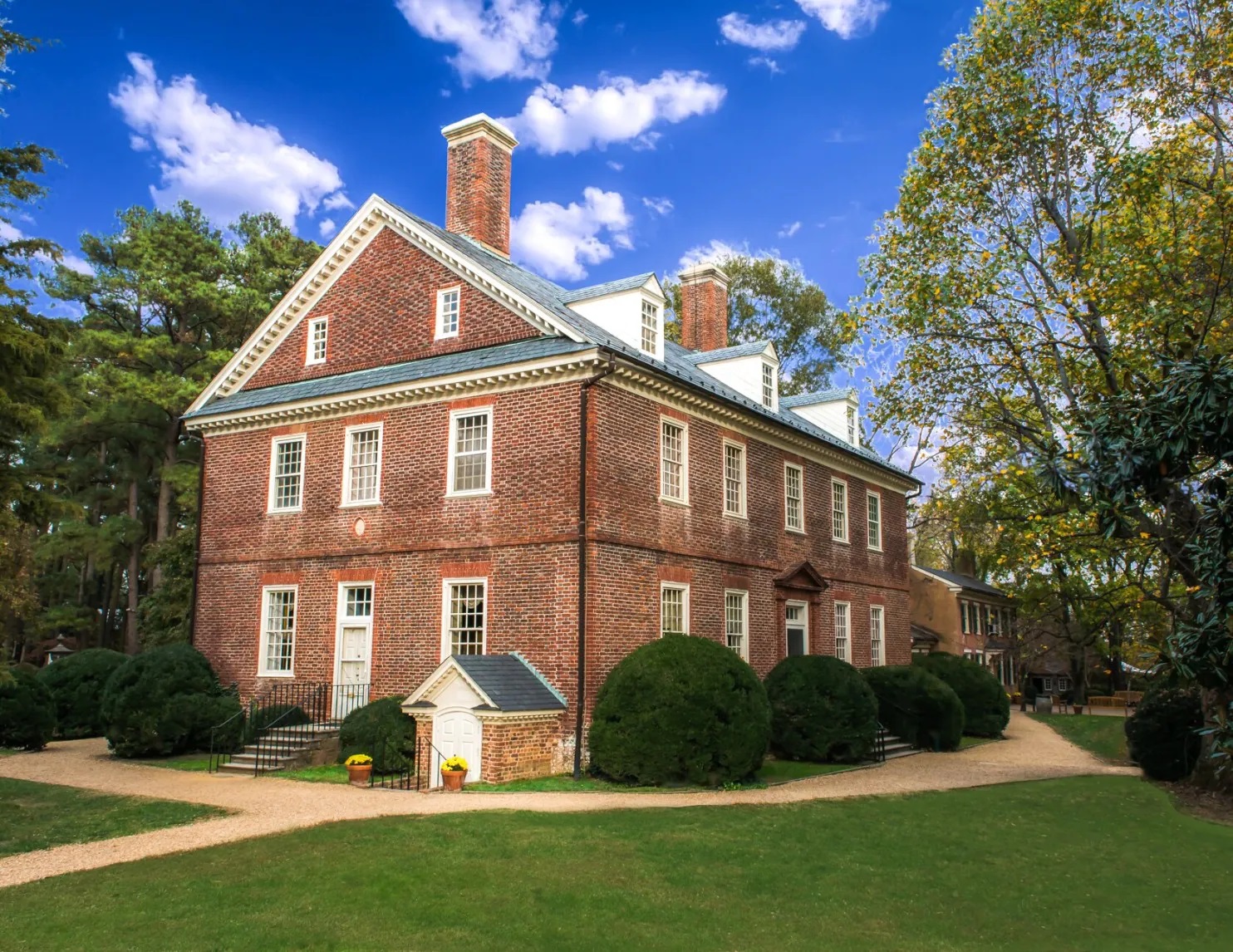
Berkeley Plantation (1726)
12602 Harrison Landing Road, Charles City, VA 23030 (map)
One of the first great estates in America, Berkeley comprises about 1,000 acres on the north bank of the James River. Originally, the property was known as Berkeley Hundred, named after the Berkeley Company of England. There, in December 1619, a group of 38 English settlers arrived to make a new settlement roughly 20 miles upstream from the first permanent settlement at Jamestown (1607). The group’s charter required that the day of arrival be observed yearly as a “day of thanksgiving” to God. Annually, the first thanksgiving is still celebrated; it pre-dates the thanksgiving at Plymouth Colony in Massachusetts.
Eventually, the site became Berkeley Plantation and was long the traditional home of the prominent Harrison family of Virginia. Using bricks fired on the plantation, Benjamin Harrison IV built an elegant Georgian structure in 1726 believed to be the oldest three-story brick mansion in Virginia. Berkeley is the birthplace of Benjamin Harrison V, signer of the Declaration of Independence and three times governor of Virginia. The estate also is the birthplace of William Henry Harrison, a war hero in the Battle of Tippecanoe, governor of Indiana Territory, and ninth President of the United States. It is the ancestral home of his grandson, Benjamin Harrison, the twenty-third President of the United States.
The main house, sited at the top of a hill, is the centerpiece of ten acres of formal gardens and parterres that slope gently to the river. Boxwood allees surround and extend from the house.
In addition to the first official Thanksgiving in America, Berkeley was the site of the first bourbon whiskey distilled in the colony in 1621 by George Thorpe, an Anglican priest. The Army bugle call, “Taps,” was composed at Harrison’s Landing, the plantation’s old wharf, by Union General Daniel Butterfield and first played by his bugler, Oliver W. Norton.
After the Civil War, the plantation passed through several owners’ hands and fell into disrepair. In 1907, Berkeley was bought by John Jamieson, a Scotsman who served as a drummer boy in the Union army during the Civil War. His son, Malcolm Jamieson, and wife, Grace Eggleston, restored the deteriorating manor and filled it with appropriate period antiques and paintings. The five terraces of gardens also were restored. Today, third, fourth and fifth generation Jamiesons enjoy the stewardship of this property.
The house and grounds are open to the public daily, 9 a.m.to 5 p.m.. Special tours, corporate events and garden weddings can be arranged by calling 1-888-466-6018 or by visiting their website at www.berkeleyplantation.com.
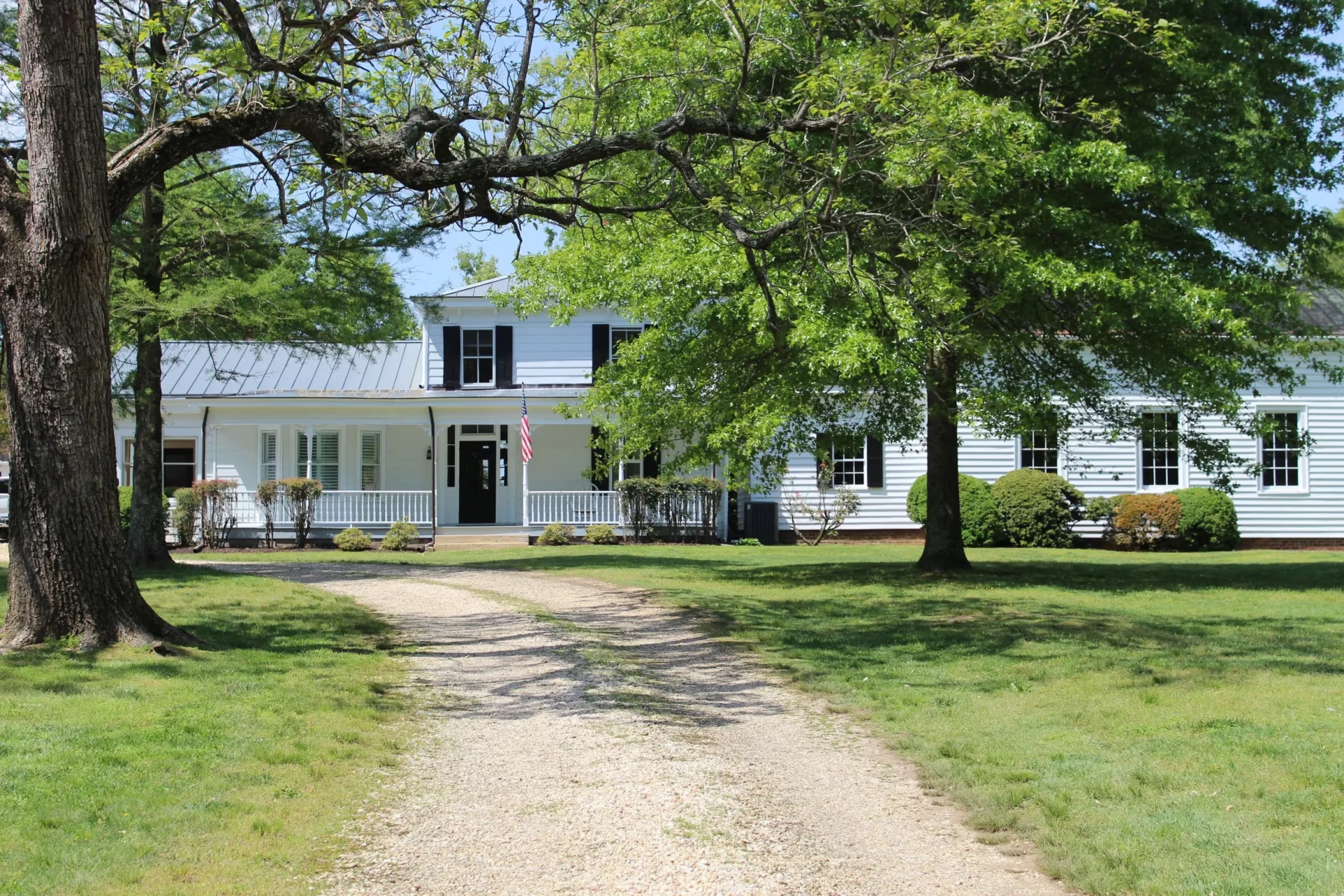
Granville (1850s)
401 John Tyler Memorial Highway, Charles City, VA 23231 (map)
The home now known as Granville dates to the 1850s and was originally built by the Ladd family; prominent Quakers with deep ties to Central Virginia. Present on the grounds of Granville today is Grace Chapel, dating to 1890, which was once used as a mission chapel for the western most parishioners of Westover Episcopal Church.
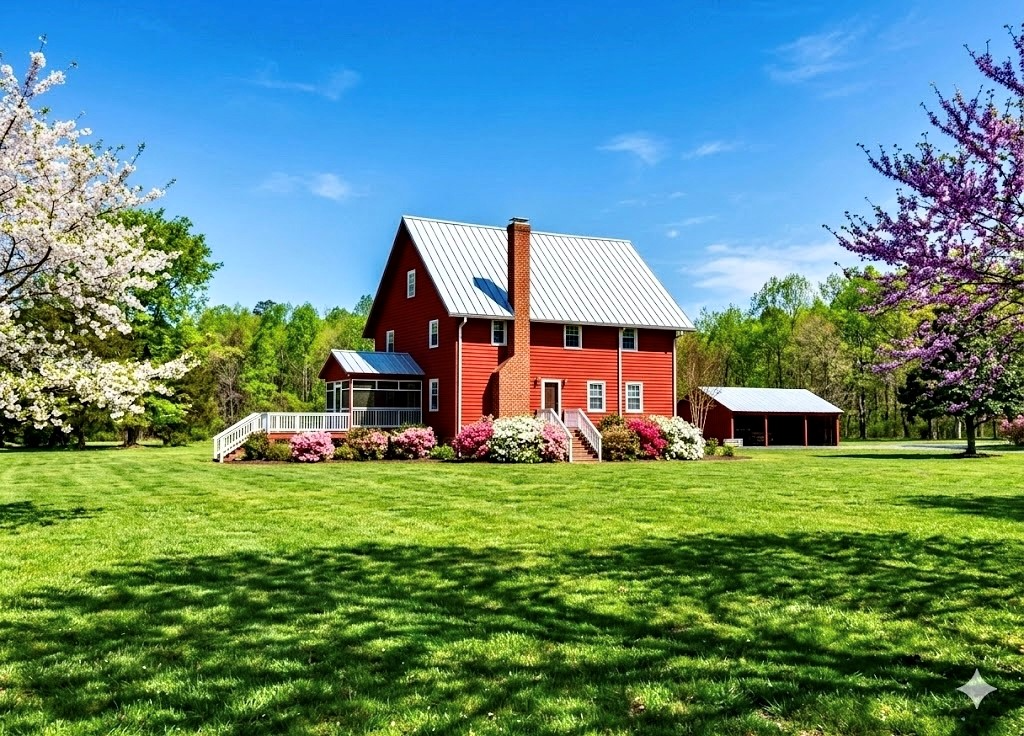
Harden’s Bluff (1840’s)
1421 John Tyler Memorial Hwy, Richmond, VA 23231 (map)
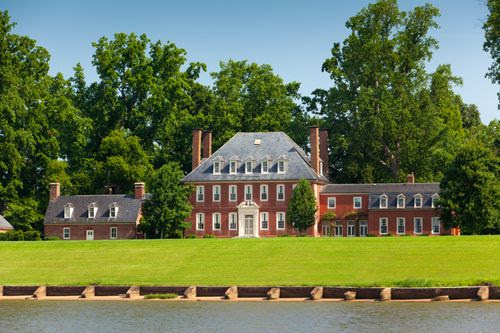
Historic WEstover (1750)
7000 Westover Rd, Charles City, VA 23030 (map)
Westover Plantation is considered to be one of the most perfect examples of Georgian architecture in America. Its elegant yet simple form and proportions, combined with a commanding setting overlooking the James River, convey the essence of 18th century artistic ideals adapted to a wealthy planter’s style of living in Colonial Virginia.
As early as 1616, John Rolfe wrote about West, now Westover, and Shirley Hundreds. The property originally was granted to the West family, but settlement was abandoned after the Indian massacre of 1622. Records from 1637 show that the Colonial Governor patented 2,000 acres of the plantation called “Westover” to Captain Thomas Pawlett, who thus became the plantation’s first owner. After passing through two other owners, Westover was sold by Theodoric Bland to William Byrd I in 1688.
William Byrd II (1674-1744), an enormously wealthy landowner, colonial official, and founder of the cities of Richmond and Petersburg, designed the estate on his return from England in the early 18th century. It is now thought that the main house was built around 1750 by his son, William Byrd III. Originally, the main house had matching wings unattached to the center section. During the Civil War, the east wing – a library that once contained the elder Byrd’s 4,000 volume collection – was destroyed accidentally by Confederate shelling from across the river. It was rebuilt around 1900, but does not match the original. At the same time, the two wings were connected to the center section.
The main doorway on the river side may be the most copied doorway in this country. Both the north and south doorways are of Portland stone, which came from England as ship’s ballast. The original wrought-iron gate stands on the north (land) side of the house. It was sent from England in 1709 and bears the monogram of William Byrd in the center. Together with two smaller gates flanking the south lawn, these comprise the finest examples of 18th century gates in this country. Lead eagles on the main gateposts are a play on the name “Byrd.” The iron fence, or clairvoyee, has supporting columns topped by stone forms symbolizing such virtues as hospitality, perseverance, and learning.
To the west of the house is a walled garden divided into four large squares, two of which are further divided into eight smaller squares. The tomb of William Byrd II in the center of the garden is marked by an obelisk with an epitaph describing the highly educated, accomplished individual whose influence was felt throughout Virginia and beyond. East of the house is the ice house and a small
structure containing a dry well supposed to connect with passageways which lead under the main house to the river, thought to be an escape route from Indians. The main house, west wing, necessary house and gate house are all 18th century structures. A separate kitchen west of the main house was built around 1830.
The house is furnished with 16th, 17th, and 18th century pieces, mostly from continental Europe. The lawns on both sides of the house are remarkable for their century-old tulip poplars, ancient beeches, and numerous trees planted by historic visitors.
The Crane/Fisher/Erda family has occupied the house since 1921, now five generations strong. Andrea Erda, daughter of Fred and Muschi Fisher, and her husband, Rob, and their three children moved into the main house in late 2012. Westover’s owners recognize the contributions and sacrifice of those whose histories are intricately entertwined here, particularly indigenous peoples and the enslaved and indentured. An exciting partnership with the Department of Historic Resources is facilitating archeological field tests in an effort to uncover more of this history, including locating prehistoric camps, enslaved quarters and burial grounds, and a 17th century courthouse, brewpub, and the original Westover Church.
Inside the main house, noted interior designer Charlotte Moss and her team continue their decorative magic in refreshing several rooms downstairs while preserving the history of the past three hundred years. The new Kitchen and Dining Room, unveiled in 2021, have brought new life to the house. A complete fabric makeover in the first-floor Parlor, in partnership with Schumacher and their new Williamsburg collection, was recently completed.
Weddings and other special events at Westover may be arranged by calling 804/829-2882 or by visiting www.historicwestover.com.
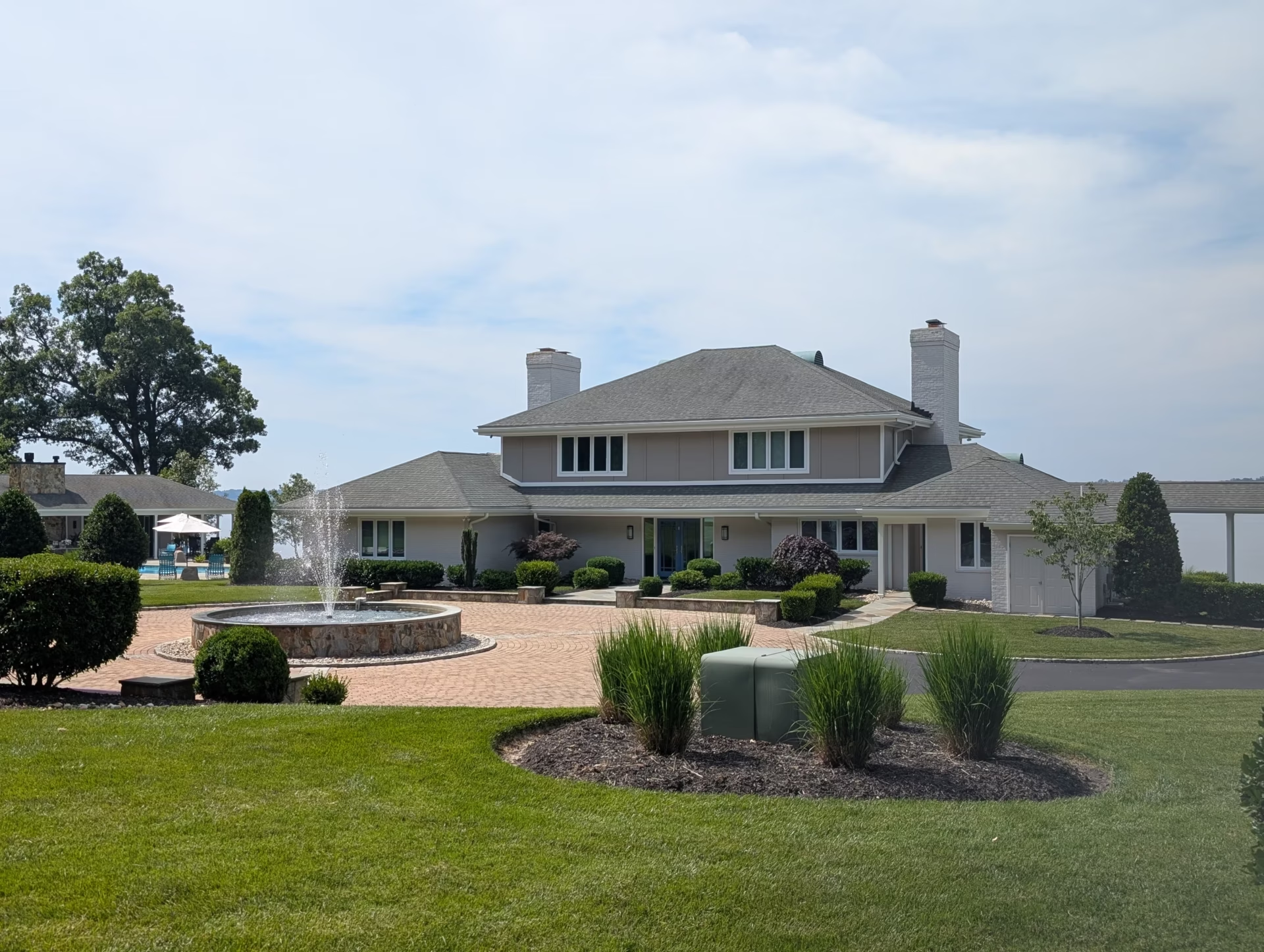
River lea (1972)
4331 Kimages Wharf Rd, Charles City, VA 23030 (map)
River Lea sits on a high bluff overlooking the James River surrounded by twenty acres of woods and beautifully landscaped lawn. The house was built in 1970 by Dick and Virginia Harrison. The current owner, Malcolm Thomas, bought the property in 2017 and undertook a major renovation of the house (5,700 SF) and grounds. Situated at the edge of the 135-foot bluff overlooking the river, he built a large new pool house with a fireplace and porches, added blue stone decking around the pool, and also a 24 foot fountain to greet visitors as they approach the front entrance of the house.
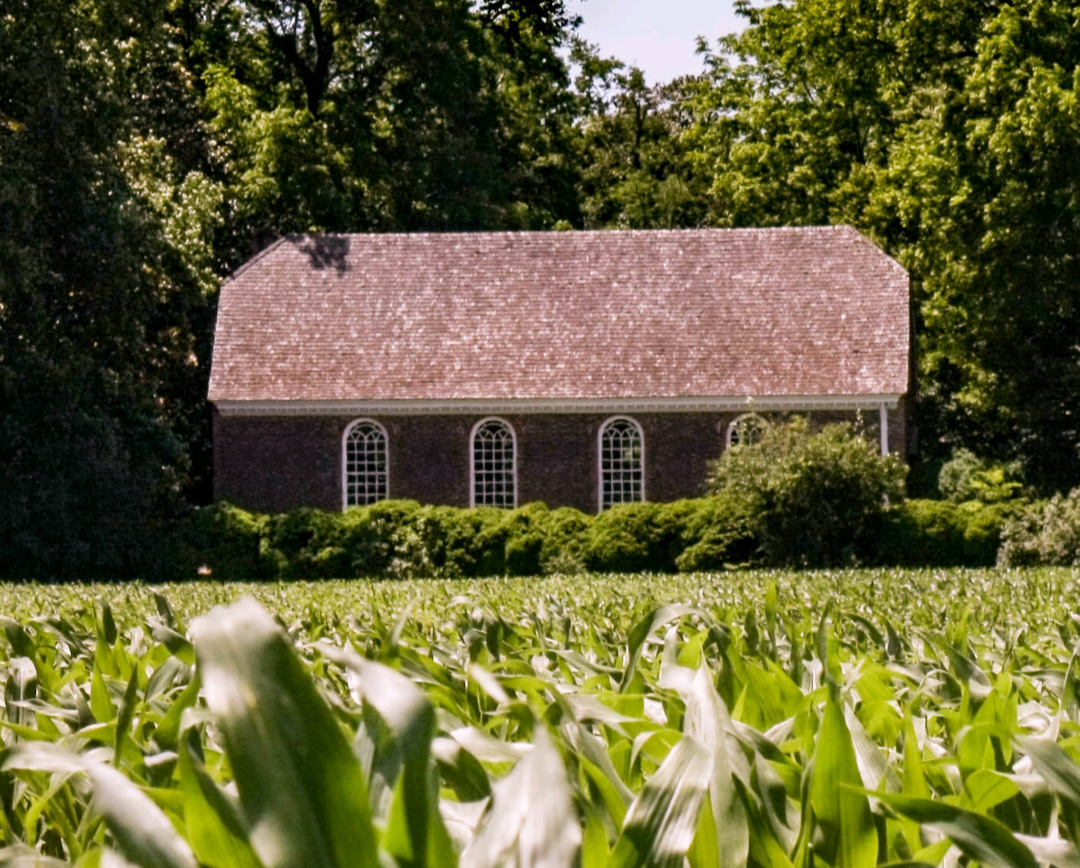
Westover Episcopal Church (1730)
6401 John Tyler Highway (map)
Westover Parish was established in 1613 in close proximity to the original settlement at Jamestown. Following the 1724 merging of all or part of the Parishes of Weyanoke, Wallingford and Wilmington into Westover Parish, Westover Parish shared the same boundaries as Charles City County, and still does. The predecessor to the existing Westover Church, probably a wooden clapboard structure, was constructed between 1630 and 1637 on the grounds of Westover Plantation. About 1730, the original structure was dismantled and reconstructed in brick at its present site overlooking Herring Creek, about one and one-half miles north of the Westover mansion. Land for the second church was given by William Byrd II.
Over the years since the present Westover Church was built, it has sustained many economic, physical and congregational changes. The Revolutionary War in 1776 ended support by public taxation for the Episcopal Church. In 1784, the church was disestablished. These precedents, and the War of 1812, created a widespread prejudice against the Church as an English Royalist institution and contributed to its general decline. The result was a period when the churches “mouldered away,” bereft of ministers, congregations, parish lands, and financial support. For almost thirty years after 1803, services of the Protestant Episcopal Church of Virginia lapsed completely in Charles City County. Westover Church lay abandoned, desecrated by misuse as a barn during part of that time.
About 1833, religious services were revived when the Reverend Parke Farley Berkeley was sent to the county as a missionary. At this time the Church structure was repaired and restored, principally through the efforts of the Harrison family of Berkeley and the Carters of Shirley.
During the Civil War, Westover Church was badly damaged by federal troops who removed pews, windows, slate flooring and even tombstones as they gathered materials for construction of winter quarters at Berkeley. The gutted building was then used as a stable by Union forces. The Church remained vacant for a time following the war as parishioners raised funds for its reconstruction. Westover Church finally was restored to service in September 1867 and has been supported faithfully ever since. Through the centuries, farmers, plantation owners, the enslaved, and Presidents, including Washington, Jefferson, Harrison, Tyler, Theodore Roosevelt and Woodrow Wilson, have worshipped here.
Two historic colonial silver communion sets are used at Westover Parish Church. The older set, handsomely designed with gadrooning, scalloped matting and punch decoration, includes a chalice (11-5/8 inches high) and paten (7-3/4 inches diameter; 2-1/4 inches high), both marked London, 1694-95, and both inscribed with a cipher of the donor’s initials, “SABE.” The cover of the chalice is inscribed “Sarah Braine” to commemorate the donor. Sarah Braine was a notorious figure, a sympathizer with Bacon’s Rebellion and the only woman excepted from the free and general pardon granted by the General Assembly in 1677. She was married four times, to Lieutenant Colonel Thomas Stegge (an uncle of William Byrd II), George Harris, Thomas Grendon, and Edward Braine, a wealthy London merchant.
A large matching baptismal basin (19-1/4 inches diameter) originally was part of the set. It was sold in 1884 to help ease dire financial conditions at Westover. The basin was given as an “Easter Gift to St. John’s Church, Richmond, Virginia. By Edmund A. Saunders and Richard L. Brown in behalf of their little daughters, Mamie, and Bessie, 1886.” The current church of Westover Parish always has used the Braine set.
The other chalice (10-3/4 inches high) and paten (7-7/8 inches diameter; 1-3/4 inches high), both bearing the London mark of 1731-32, are engraved with the sacred HIS monogram in a sunburst, a common motif in 18th century church silver. Both pieces are inscribed “The Gift of Col: Fran: Lightfoot Anno 1727.” “Westover Parish Church” was inscribed later. The Lightfoot set was used until 1920 in Lower Westover Parish, first at Wallingford Church and then at Mapsico Church, neither of which now stands.
During the Civil War, the Lightfoot silver was buried under a barn for safekeeping from the approaching federal troops. It was found and taken for use by a Union Captain for drinking his whiskey. When an old gentleman of the county learned of this, he approached U.S. Gen. Carr at Fort Pocahontas on Wilson’s Landing in May 1865, asking that the silver be restored to Westover Parish. Gen. Carr did so, much to the relief and gratitude of the petitioner.
Westover Parish records illustrate early vestrymen included the names of Lightfoots, Blands, Minges, Byrds, Carters, Harrisons, Tylers, Christians, Seldons, Nelsons, Lewises, Douthats, Eppes, Willcoxes, Hills, Drewes, Peebles, Wyatts, Wynnes and others. Many of these names, or their descendants, can be found in 19th, 20th and 21st century vestry books and parish records.
Today, Westover Episcopal Church has an active congregation. Its outreach programs include delivery of Meals on Wheels to local citizens, a partnership with Habitat for Humanity, an annual Thanksgiving food drive, a monthly feeding ministry with Walter Paige’s Missionary Kitchen, and ongoing program support for Charles City County Schools.